
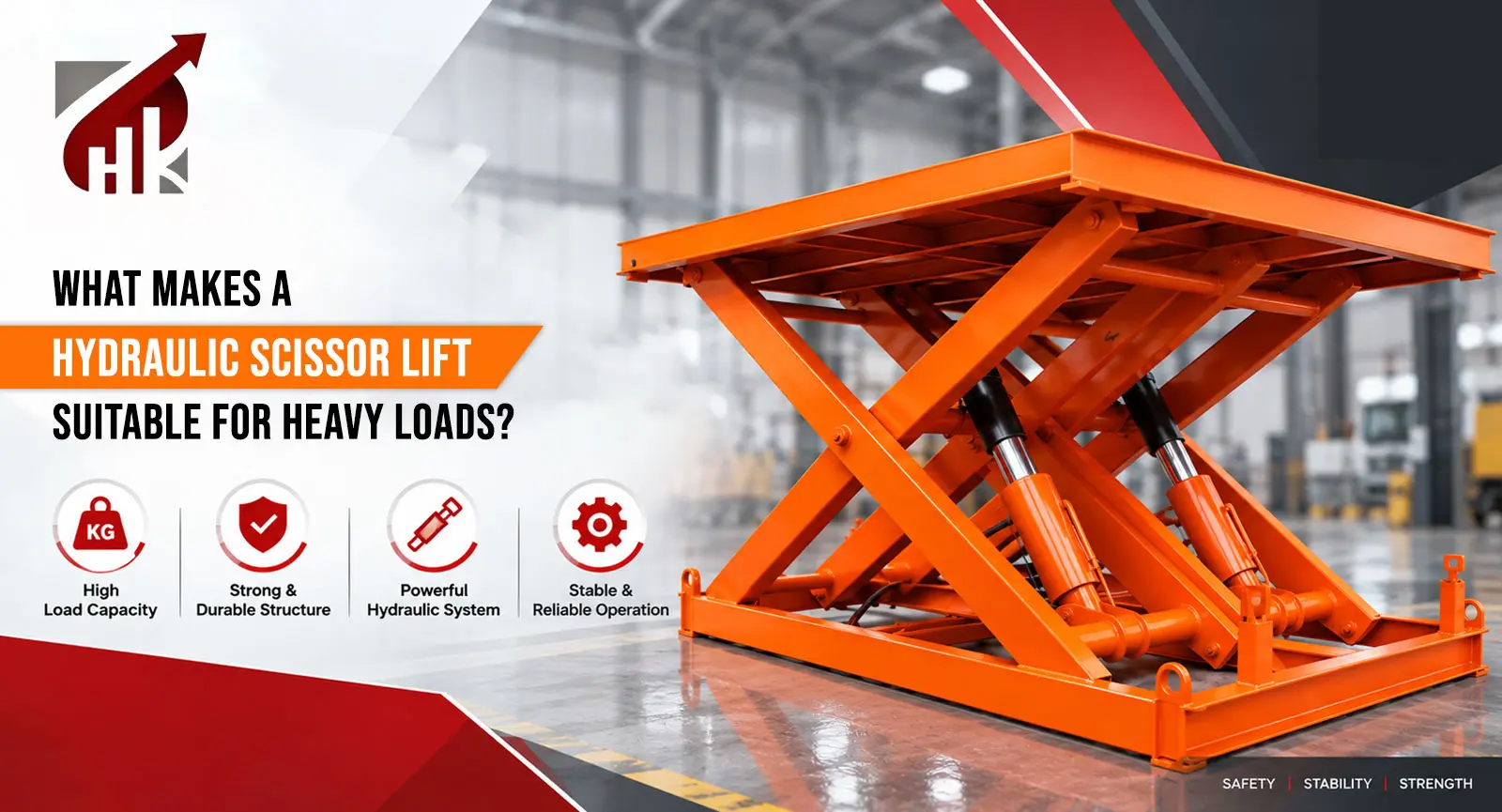
Quick Summary: A hydraulic scissor lift is used on a heavy-duty factory floor through a combination of factors: a reinforced steel frame, correctly sized hydraulic cylinders, balanced load distribution across the platform, and a pump system built for repeated cycles. This article breaks down each of these factors and shows what to look for before you invest in a hydraulic scissor lift for your facility.
Introduction
A hydraulic scissor lift is a piece of material handling equipment built to raise and lower heavy loads using a folding, X-shaped support structure powered by hydraulic cylinders. As the cylinders extend, the crisscrossed legs beneath the platform straighten out, lifting the deck in a straight vertical path rather than swinging it through an arc the way a crane or a mast-based lift would. This makes it one of the most stable ways to move weight upward, which is exactly why it is mostly used as an industrial scissor lift in warehouses, production lines, loading docks, and heavy fabrication units.
What makes a hydraulic scissor lift suitable for heavy loads isn’t just hydraulics; it’s the combination of a reinforced steel frame, correctly sized cylinders and pump, and a platform engineered to keep weight distributed evenly as the lift moves. A well-built unit can hold several tonnes steady at height without drifting, because of the self-locking nature of hydraulic pressure, and it can do this cycle after cycle without the frame or the seals giving way early. That combination of strength, stability, and consistency is what separates a lift that performs under heavy industrial use from one that only looks capable. The sections below break down exactly what goes into that difference, and what to check before you choose one for your own facility.
Understanding How a Hydraulic Scissor Lift Handles Weight
A scissor lift gets its name from the crisscrossed, folding support legs beneath the platform, which look like an open pair of scissors. As hydraulic cylinders push the base of these legs apart, the platform rises in a straight vertical line. This design spreads the load across multiple pivot points rather than concentrating it on a single mast or arm, which is exactly why hydraulic scissor lifts can carry heavier and bulkier loads than many other types of lifting equipment.
The lifting force itself comes from a hydraulic pump that pressurises oil and drives it into the cylinders. A two-inch bore hydraulic cylinder running at typical industrial pressure can generate well over six thousand pounds of force in a fairly compact space, which is part of why hydraulic systems have long been the standard choice for a heavy industrial scissor lift. The oil pressure also creates a self-locking effect, which means the platform holds its position under load even if the pump stops running, which adds an extra layer of safety during loading and unloading.
Key Engineering Factors That Determine Load Capacity
A hydraulic scissor lift’s rated capacity comes from how the frame, cylinders, and platform of an industrial scissor lift are engineered to work together under such conditions. The following are the factors that determine the load capacity:
1. Structural Frame and Steel Quality
The scissor legs and base frame carry the entire weight of the load, and the pressure created every time the lift raises and lowers. Thicker, properly welded steel members resist bending and metal fatigue far better than lighter frames, which matters a great deal in facilities where the lift runs dozens of cycles a shift. A frame built for heavy loads will also have wider pivot pins and reinforced joints at the points where stress concentrates most.
2. Hydraulic Cylinder Sizing and Pump Power
Cylinder bore size and the pump’s flow rate together decide how much weight a hydraulic scissor lift can raise and how smoothly it does so. Undersized cylinders working near their limit tend to wear out faster and can cause jerky, uneven lifting, which is uncomfortable and unsafe when heavy or unstable loads are on the platform. Heavier-duty industrial units typically run at higher hydraulic pressure with chrome-plated rams for added strength and longer cylinder life.
3. Platform Design and Load Distribution
Capacity ratings usually assume the load is distributed evenly across the platform. A concentrated or off-centre load, even one below the stated maximum, places extra load on specific pivot points and can affect stability. This is why heavy-duty platforms are built wider and with reinforced decking, and why some designs add rollers or guide rails to help operators centre the material correctly before lifting.
Choosing the Right Material Handling Hydraulic Scissor Lift for Your Load
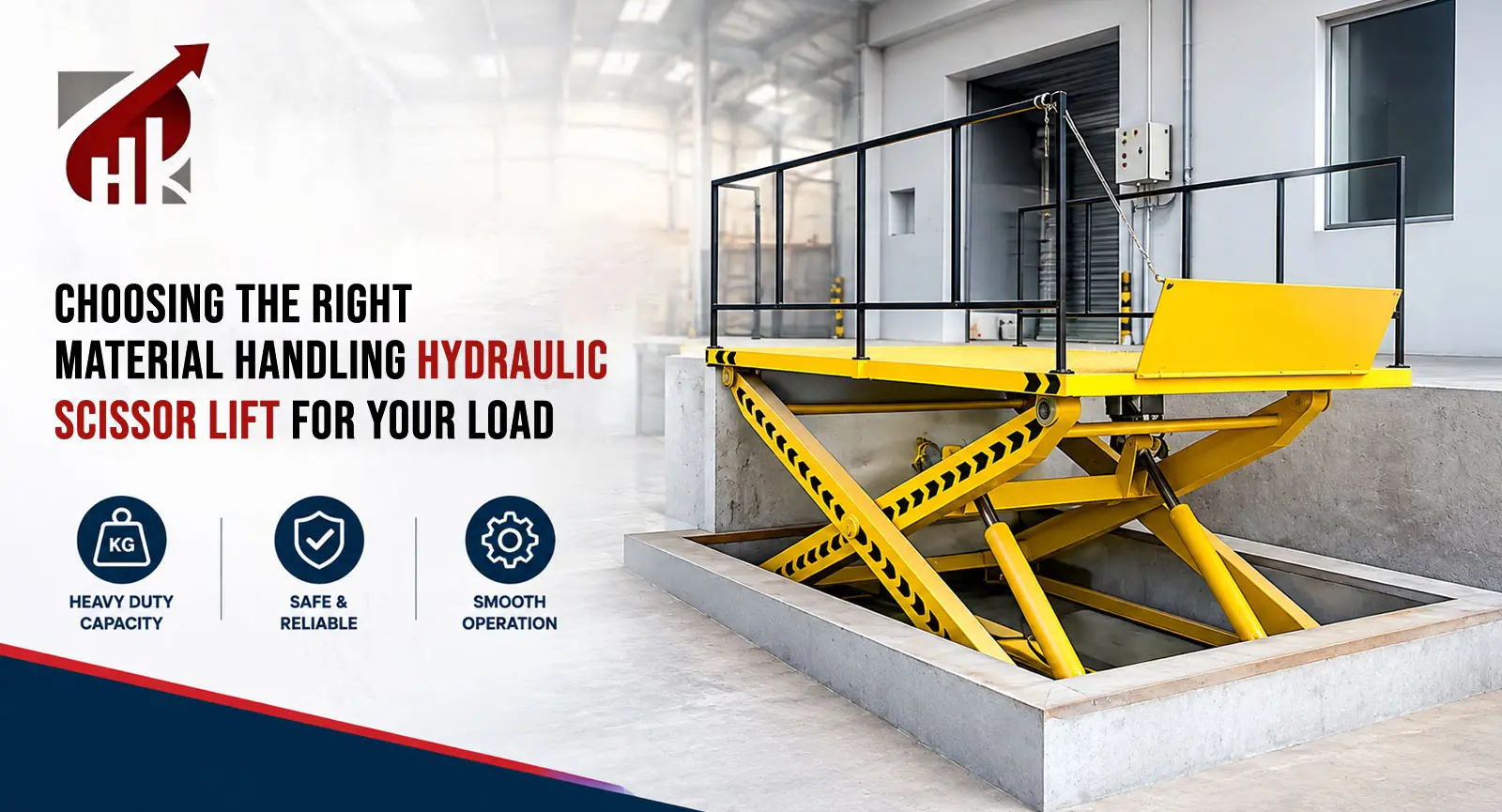
Selecting the correct material handling scissor lift starts with a deep look at what you’re lifting. Consider these points:
- The load weight, including packaging. Many buyers estimate based on the product alone and forget that crates, pallets, or fixtures add to the weight.
- Load shape and how it is on the platform. Long or irregular items shift the centre of gravity, so platform size matters as much as capacity.
- Lift height and clearance needed. A pit-mounted lift suits facilities that need the platform flush with the floor, while a hydraulic scissor lift suits operations that move between work areas.
- Cycle frequency. A lift used a handful of times a day has very different wear requirements compared to one running continuously on a production line.
- Environment. Washdown areas, outdoor yards, and dusty facilities each call for different seals, coatings, and enclosure levels.
Getting these right at the selection stage saves far more money over the equipment’s life than chasing the lowest upfront price.
Maintenance Practices That Protect Load Capacity Over Time
The number stamped on a lift’s nameplate is only accurate on the day it leaves the factory. What keeps that number reliable years later comes down to how the equipment is looked after, not just how it was built. A few habits that make the biggest difference in a material handling scissor lift are:
- Keeping hydraulic fluid clean and on schedule. Contaminated or old oil is one of the most common reasons a lift starts to drift or sink slightly under load, and regular fluid checks catch this long before it becomes a safety issue.
- Lubricate pivot points and rollers consistently. These are the parts absorbing the weight every single cycle, and skipping lubrication lets friction build up unevenly across the frame, which accelerates wear exactly where you don’t want it.
- Inspect welds and pins on a set routine, not just when something looks off. Fatigue cracks and worn pins rarely give signs. Catching them during scheduled inspection is far cheaper than discovering them after a failure.
- Watch seals for early signs of leakage. A small drip today is usually a bigger repair tomorrow, and seals are inexpensive to replace compared to the cylinder damage that follows if they’re ignored.
None of this requires a large team or a complicated schedule. It just requires consistency, because a hydraulic scissor lift rewards regular attention with years of dependable, full-capacity performance.
Conclusion
At the end of the day, a good hydraulic scissor lift comes down to three things: a strong frame, the right hydraulic cylinders, and a platform that holds weight evenly. Get these right, and the lift will carry heavy loads safely for years without giving you trouble. HK Industries builds its industrial scissor lift range keeping this in mind, so they hold up on the shop floor, not just on paper. Before you buy one, think about your actual load first.
FAQs
