
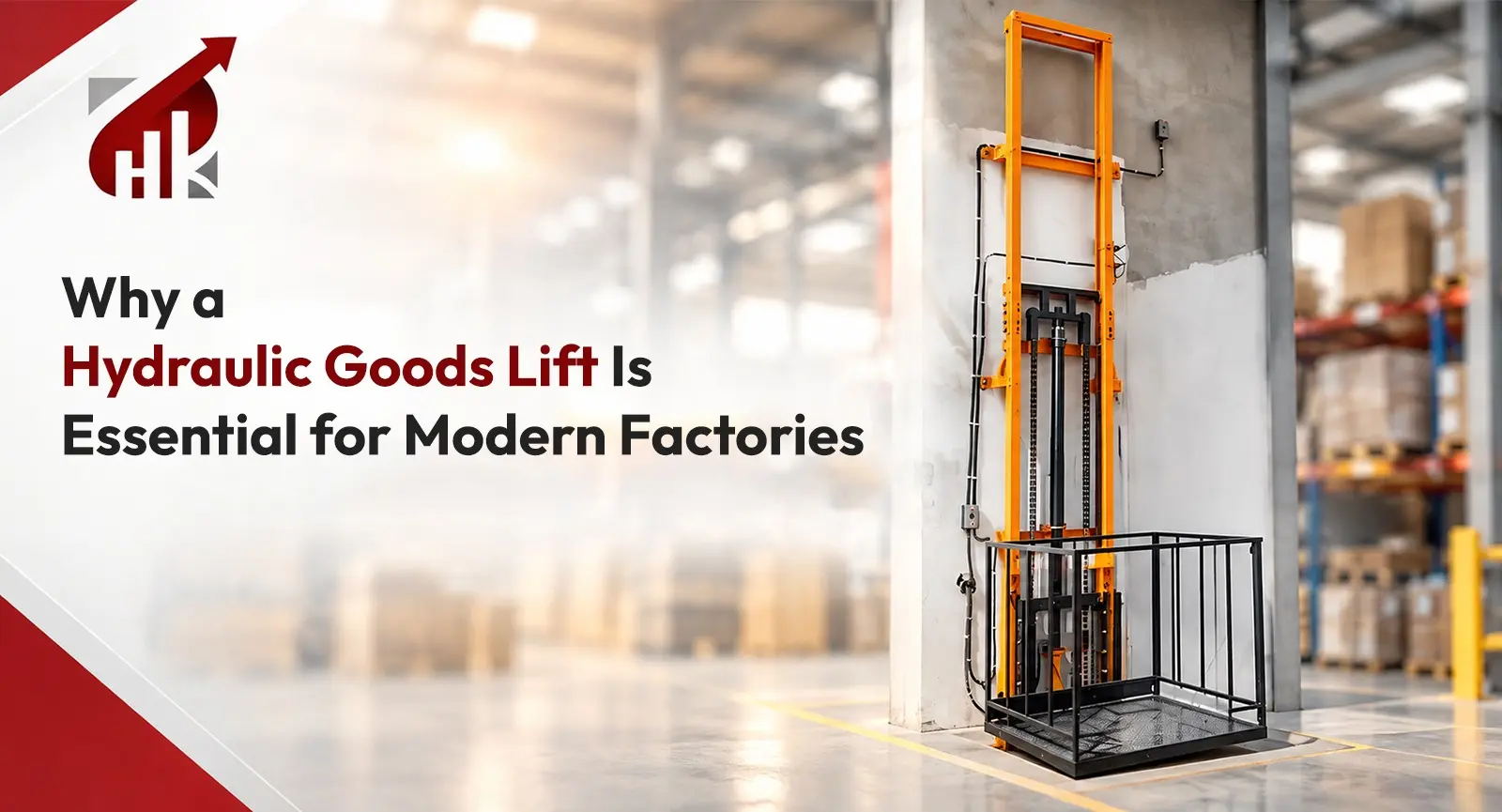
Quick Summary: This article explains how a hydraulic goods lift works, why factories rely on it, where it fits best, and where its limits lie. It also covers how to choose one, Indian compliance basics, upkeep habits, common mistakes, and answers to common buyer questions.
Introduction
Modern factories succeed or stall on one thing: how smoothly goods move. Raw material has to reach the production floor, finished stock has to reach the dispatch bay, and none of it can be placed waiting for someone to carry it. When that movement happens between floors, a hydraulic goods lift becomes one of the most valuable machines in the building. It lifts heavy loads steadily, so pallets, drums, and fragile cartons arrive in the same condition they left. It takes the carrying out of workers’ hands, which reduces strain and the risk of dropped goods. It fits into many older multi-storey plants without major structural change, and it keeps production lines supplied at a predictable pace. Faster handovers between departments mean shorter delays, fewer errors, and better use of floor space. In short, a hydraulic goods lift protects people, products, and time at once, and that combination is why growing factories treat it as essential equipment, not an optional extra.
How Does a Hydraulic Goods Lift Work?
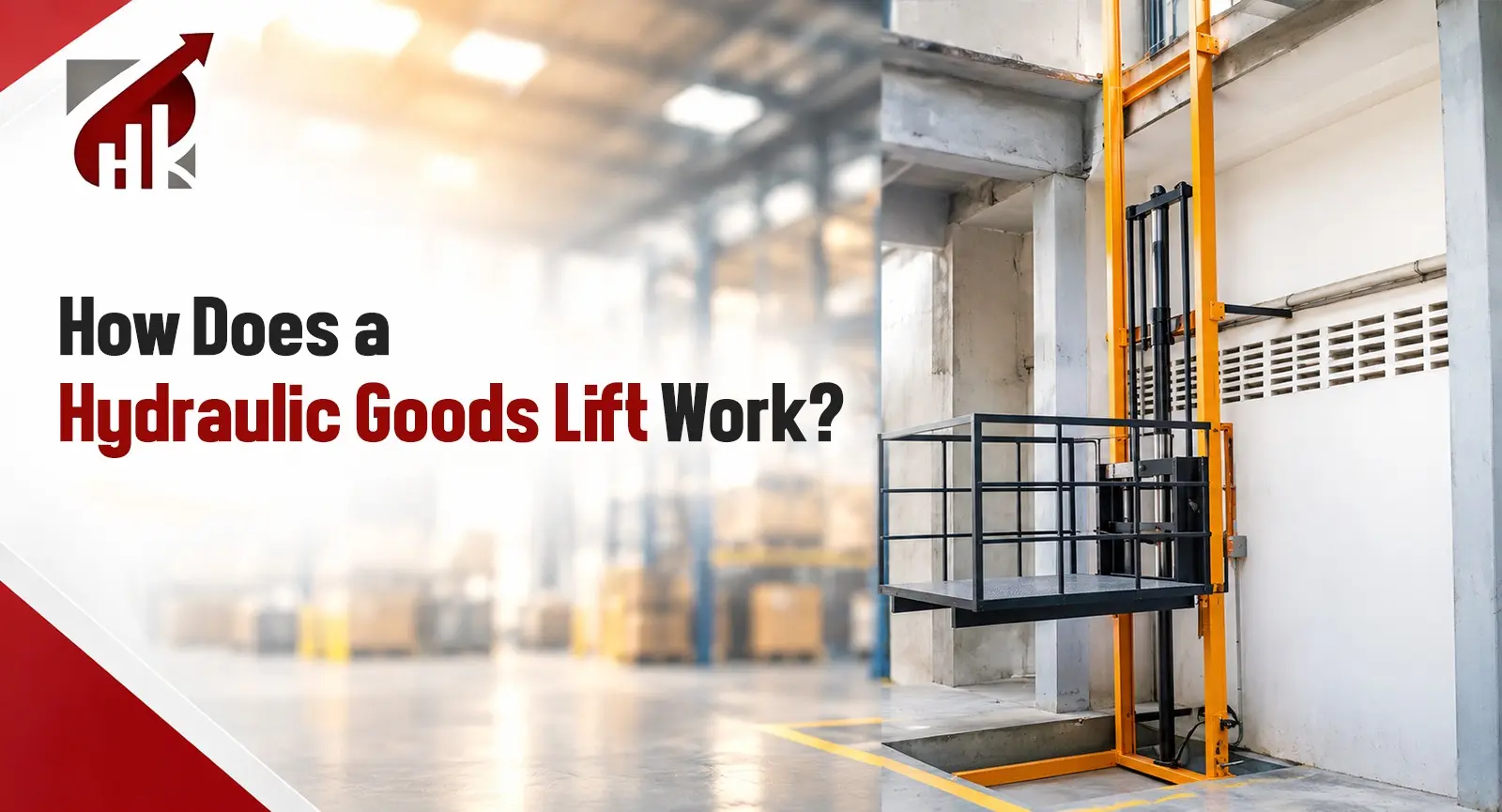
The principle is simple. A pump unit pushes oil into a cylinder, and the oil forces a piston upward, lifting the car. To go down, a valve releases the oil and gravity lowers the car, so the lift uses no pump power on the way down. Hydraulic oil barely compresses, which is why the car can stop and level accurately at each floor.
Five parts of the hydraulic goods lift that ensure the proper functioning of the machine are as follows:
- Pump unit: Motor, pump, and oil tank.
- Cylinder and piston: Convert oil pressure into lifting force.
- Valve block: Controls speed and includes overload protection.
- Car or platform: Carries the load along guide rails.
- Controls and doors: Set stops, leveling, and landing access.
Quality in each part decides how smooth and safe the ride feels.
Why Modern Factories Depend on the Hydraulic Goods Lift
Imagine a packaging unit with finished cartons on the first floor and the dispatch bay on the ground floor. Without a lift, workers carry boxes down, or forklifts climb a ramp that takes alot of floor space. With a hydraulic goods lift, a loaded trolley rolls in, rides down, and rolls out. The following are the reasons why modern factories are dependent on this lift:
1. Heavy Loads, Steady Ride
Factory models typically carry from about 500 kg to several tonnes, and the oil gives a smooth start and stop. That steadiness protects fragile goods and keeps heavy pallets from swinging.
2. Less Manual Lifting
Carrying boxes by hand can lead to strain injuries over time. A hydraulic goods lift lets trolleys and pallet trucks move straight in, so workers push instead of lift.
3. Flexible Layouts
The pump unit can be placed beside the shaft, so the building often needs no machine space on the roof. That helps in older factories where overhead space is tight.
4. Fewer Delays Between Departments
When goods wait for a free crane or a spare pair of hands, production stalls. A lift available all shift keeps stock moving between departments.
Types of Hydraulic Goods Lifts: Single Mast, Double Mast, and Industrial Goods Lift
Walk into three factories, and you may see three different lifts. Most fall into one of these groups:
1. Single Mast Goods Lift
Think of this as the compact one. The platform slides along a single column fixed to a wall, so it takes very little floor space. Around 500 kg is common, over a few meters of height. Small workshops and stores often pick it.
2. Double Mast Hydraulic Goods Lift
Add a second column and the lift gets sturdier. The load is shared across two masts, so it can take more, often one to two tonnes. If your crew moves pallets or loaded trolleys every day, start here.
3. Industrial Goods Lift
This is the hydraulic goods lift you see in busy plants. The car travels inside a shaft with a door at every landing, which protects the load and the people nearby. Capacities run into several tonnes, and some makers go up to 10 tonnes, enough for pallets, drums, and even machinery.
Numbers vary by maker, so start with your heaviest load and tallest floor, then ask which hydraulic goods lift is perfect for your working conditions. Capacity figures here come from supplier listings, so they are typical ranges, not fixed standards. If you want it even more conversational, tell me which part still sounds stiff, and I’ll rework it.
Where Factories Use a Hydraulic Goods Lift
You will find these lifts in many kinds of plants:
- Textile and garment units moving fabric rolls and finished goods.
- Food and pharma plants, often with stainless steel cars for easy cleaning.
- Auto parts and engineering shops lifting dies, tools, and castings.
- Packaging and warehousing units shifting cartons and pallets between floors.
- E-commerce and cold storage hubs moving pallets between mezzanine and ground floor.
Wherever goods change floors daily, a lift saves effort every shift.
Quick Comparison With Other Options
Here is how the options compare:
| Option | Best for | Main limit |
| Hydraulic goods lift | Heavy loads over a few floors | Moderate speed |
| Traction goods lift | Taller buildings, faster trips | Needs machine room space |
| Forklift with ramp | Low-rise sites with space | Ramp takes floor space |
| Crane or hoist | Single-bay lifting | Limited reach |
Pick on your loads and floors, not on habit.
Choosing the Right Hydraulic Goods Lift
Bring these details to every supplier:
- Load: Rated capacity, plus the weight of trolleys or pallet trucks.
- Platform size: Big enough for your biggest pallet or trolley, with room to turn.
- Travel height: The number of floors and landing heights.
- Doors: Manual, automatic, or vertical bi-parting for tight spaces.
- Safety: Overload protection, a pipe-burst valve, emergency lowering, and door interlocks.
- Material: Mild steel for general use, stainless steel for food and pharma.
A clear detail on the types of hydraulic goods lifts and which one to choose lets manufacturers price like for like.
Conclusion
A hydraulic goods lift rarely gets attention while it’s working in the factories, yet it quietly keeps a factory moving. Loads travel safely, workers lift less, and every floor stays connected to the next. The right choice starts with honest numbers: your heaviest load, your floors, and your site. Add proper inspection and routine care, and the lift serves reliably for years. HK Industries can help you match the goods lift to your plant, so goods move between floors with less effort and more control.
FAQs
