Why Are Industries Moving Away From Ladders and Fixed Platforms?
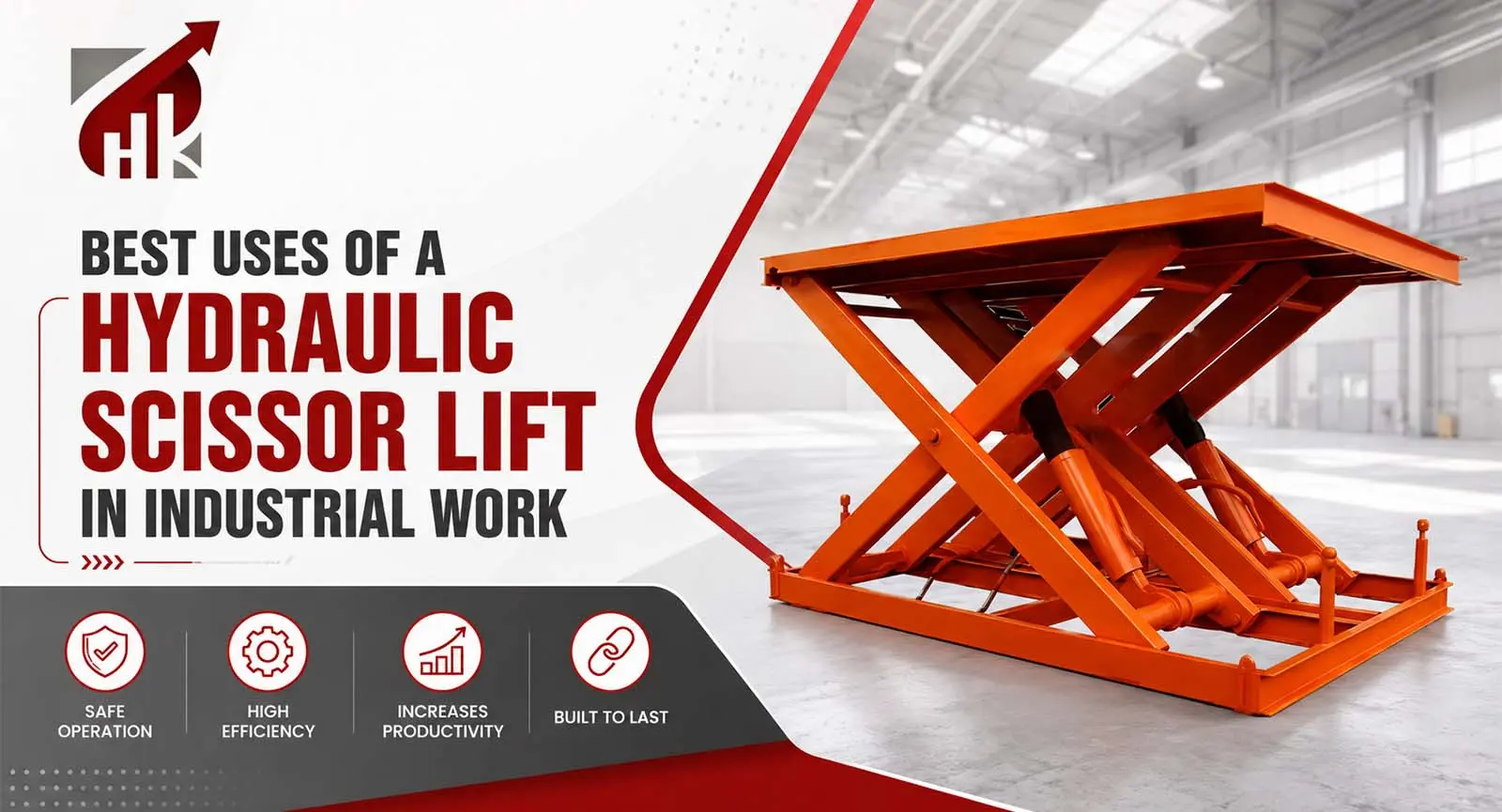
Working at height in industrial environments has always been inconvenient at best and dangerous at worst. Ladders wobble, fixed platforms can’t move, and scaffolding costs time and money every time it goes up and comes down. As operations get busier, safety standards tighten, and work becomes more complex, the old ways of doing things start causing real problems. The hydraulic scissor lift has become the go-to solution across industries — a stable, elevated platform that goes up when needed, comes back down, moves to the next job, and gets workers where they need to be without the compromises that come with traditional access methods.
What Is a Hydraulic Scissor Lift?
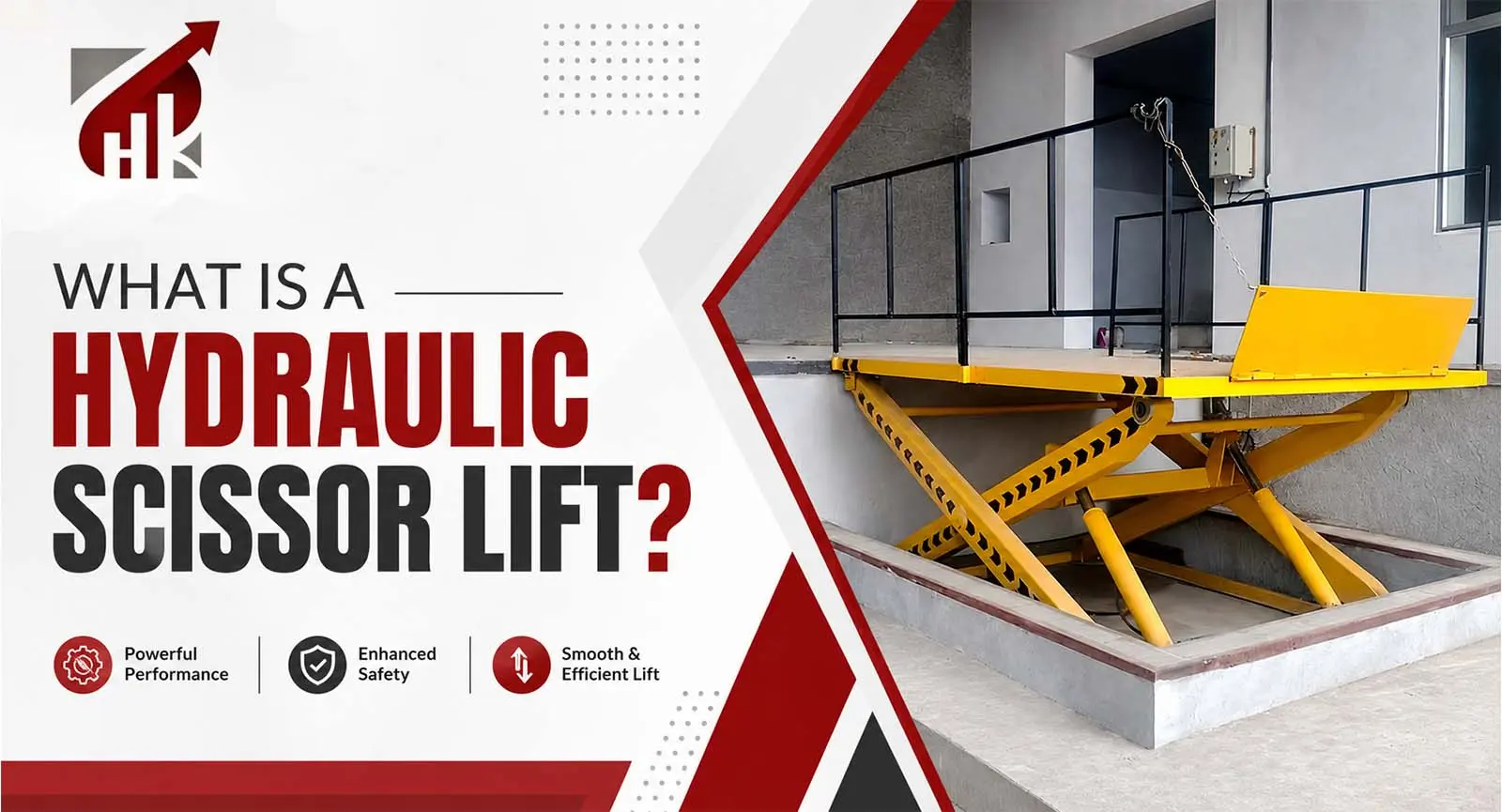
It is a work platform that rises vertically using a criss-cross metal framework — the scissor mechanism — driven by hydraulic cylinders. The hydraulic pressure expands the cylinders, opening the scissor arms and raising the platform. The platform can then lower itself in a controlled manner, by letting the pressure out.
Key components:
- Platform — the working surface on which operators and materials are standing on
- Scissor mechanism – the folded steel arms that provide the lifting action
- Hydraulic cylinder – converts the pressure of fluid into mechanical force to lift the platform.
- Power unit – electric motor, battery or manual pump, depending on model
- Safety railings – Guardrails around the edge of the platform to prevent falls
- Base frame – the ground level structure that supports the entire assembly
Models are available in stationary and mobile configurations, with platform heights from around 1.5 metres to over 10 metres depending on the application.
Best Industrial Uses of a Hydraulic Scissor Lift
1. Assembly Line Work at Height
Large manufacturing facilities — aircraft, heavy vehicles, machinery, structural fabrications — regularly need workers accessing elevated sections of assemblies. A scissor lift puts the worker at exactly the right height, keeps them stable, and moves with the work as it progresses along the line.
Why it works better than alternatives:
- Both hands are free to actually do the work rather than hold on
- Tools and parts stay on the platform, not on the ground below
- The stable surface reduces fatigue and improves the quality of the work itself
2. Equipment and Machinery Maintenance
Industrial machinery needs regular attention — lubrication, inspection, component replacement — often at heights that are genuinely difficult to access safely. A hydraulic scissor lift gets maintenance teams directly to the work without needing permanent access structures in place.
Common maintenance applications:
- Overhead crane and hoist servicing
- Conveyor system maintenance
- HVAC and ventilation equipment access
- Electrical panel and cable tray work
- Large machinery inspection and overhaul
3. Warehouse Storage and Retrieval
In warehouses with tall racking, a hydraulic scissor lift is one of the more practical solutions for accessing upper levels safely. Workers can load and retrieve items, carry out racking inspections, and manage stock at heights that forklifts can’t safely reach with people on board.
Advantages in warehouse environments:
- Fits between racking rows with precise positioning
- The platform carries both the worker and what they’re picking or placing
- Far safer than the common — and dangerous — habit of standing on forklift forks
- Electric models produce no emissions, which matters in enclosed spaces
4. Construction and Building Fit-Out
Ceiling installation, ductwork, electrical wiring, lighting, plastering — these are all height tasks that run through large floor areas in construction projects. A scissor lift lets trades work their way across a space without dismantling and rebuilding scaffolding at every move.
Mobile scissor lifts are particularly useful here — repositioning takes minutes rather than the hours that scaffold moves can consume.
5. Loading and Unloading Operations
Scissor lift tables — a variation on the hydraulic scissor lift — are widely used at loading docks and production lines to bring loads up or down to the right working height. This removes the bending, stretching, and awkward postures that cause injuries over time in materials handling operations.
Applications include:
- Raising loads to conveyor height for transfer
- Positioning heavy components for assembly
- Levelling between truck bed height and warehouse floor
- Height-adjustable workstations for different operators
6. Painting, Coating, and Surface Treatment
Large structures, storage tanks, building exteriors, and fabrications all need surface treatment that happens at various heights over a wide area. A hydraulic scissor lift gives painting teams a stable, repositionable surface that adjusts to the exact height needed as the work moves along.
7. Inspection and Quality Control
Inspecting large fabrications — pressure vessels, structural steel, tanks — often means getting an inspector close to surfaces and welds at height. A scissor lift positions them exactly where they need to be, without scaffolding that would get in the way of the surfaces being checked.
Final Thoughts
HK Industries manufactures and supplies hydraulic scissor lifts across a range of heights, capacities, and configurations — for industrial, warehouse, construction, and maintenance applications — with customisation options and bulk supply for project and procurement requirements.
Frequently Asked Questions
